
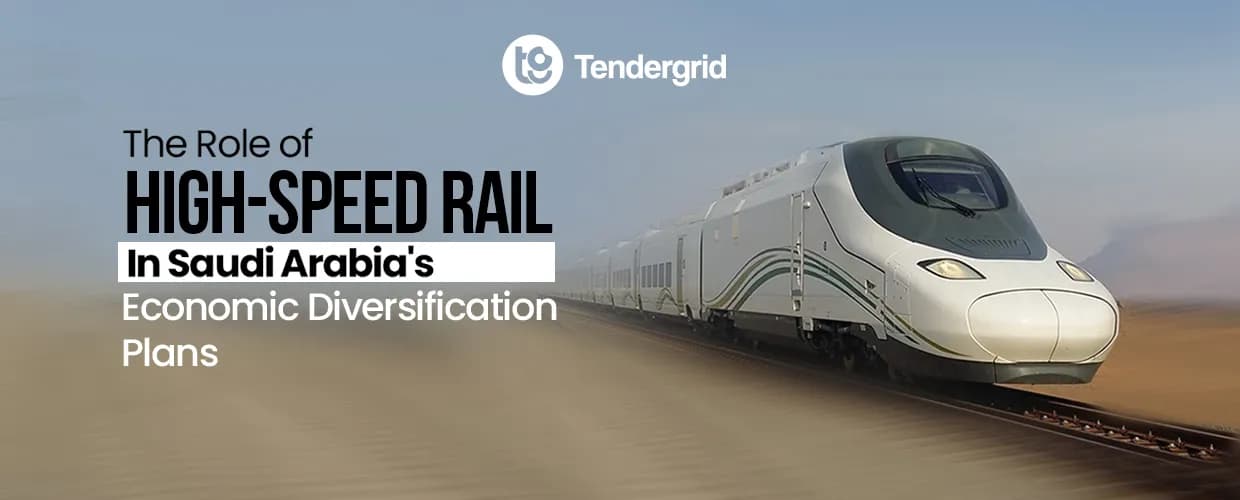
Saudi Arabia has strategically been investing in its transport industry as part of the broader Vision 2030, as the nation seeks to reduce its overdependence on oil-driven revenue. The high-speed rail Saudi tenders vision has been a crucial component of this, with initiatives such as the Haramain High-Speed Rail and upcoming extensions under consideration to enhance connectivity, boost tourism, and offer commercial opportunities. As more and more Saudi Arabia railway tenders have become available, companies such as Tender Grid and others have an opportunity to assist in this evolutionary process.
Saudi Arabia's high-speed rail is not merely an infrastructure project—it is a driver of economic growth and diversification. The Haramain High-Speed Rail, for example, has already demonstrated its significance in providing a boost to religious tourism by efficiently connecting the holy cities of Makkah and Madinah via Jeddah. It not only increases passenger mobility but also generates revenue from pilgrims traveling to the country.
Apart from tourism, the train plans also align with Saudi government plans for the improvement of urban transport, reduction of traffic, and reduction of reliance on oil. Riyadh Metro as well as the prospective metro in Jeddah would also be integrated with high-speed rail to develop a viable transport system.
1. Employment Generation and Business Opportunities
Investment in Saudi Arabian rail infrastructure tenders creates employment in numerous sectors, from construction and engineering to operation and maintenance. Foreign investment is also being encouraged, as well as public-private partnership promotion. The National Transformation Programme (NTP) predicts private sector involvement to increase to 50% in railway development, a major growth compared to before.
2. Increasing Non-Oil Revenues
The construction of high-speed rail enables key sectors such as manufacturing, logistics, and tourism, which all create non-oil revenues. Saudi Landbridge Project is a good example and will connect Jeddah and Riyadh so that transporting goods becomes more efficient, reducing the cost of logistics for businesses.
There are several high-speed rail projects and expansions on the cards, drawing investors and contractors who want to participate in high-speed rail Saudi tenders. Some of the most outstanding projects are:
The most significant benefit of high-speed rail is its ability to reduce carbon emissions. Saudi Arabia, while working towards sustainable objectives through Vision 2030, can reduce the usage of cars and aircraft by establishing rail networks, thereby reducing greenhouse emissions. Electric high-speed trains use much less energy compared to conventional diesel-based modes of transport, as Saudi Arabia works towards a greener future.
Besides, deployment of renewable sources of energy like solar power for railway operations will improve sustainability even further. As Saudi Arabia has sufficient solar resources available, utilization in railway operations will lower the future cost of energy and environment liabilities.
Saudi Arabia is considering the use of smart rail technologies with AI, IoT, and big data as part of the country's push for modernization. The technology can enhance operation efficiency, safety, and passengers' experience. These are some of the innovations considered to upgrade the performance of railways, including the use of smart ticketing, automated train control, and predictive maintenance.
Further, integrating high-speed rail with online platforms for logistics and passenger services can expedite supply chain management and improve customer convenience. Adoption of the latest technology will place Saudi Arabia at the regional forefront of Middle Eastern smart transport solutions.
High-speed rail Saudi projects will dominate urbanization and regional growth. By connecting cities and upcoming economic hubs, rail infrastructure enhances real estate growth, increases land value, and fosters commercial investment. The government has planned a number of economic cities such as NEOM that will be deeply connected with advanced rail networks for sustainable urbanization.
In addition, rail integration reduces population density in major metropolitan cities like Riyadh and Jeddah by encouraging suburban and secondary cities. This decentralization translates to better resource allocation and balanced economic growth in the different regions.
While it has its benefits, the development of high-speed railways in Saudi Arabia has some problems. The desert landscape of vast expanses within the country poses engineering problems, which require up-to-date technology and materials in laying tracks. The high cost of the project and the need for skilled personnel also represent financial and operational problems.
Nevertheless, the government of Saudi Arabia is set to address these challenges by means of policy reforms, international investments, and strategic alliances. As technologies used in infrastructure continue to develop, the cost-benefit ratio and efficiency of railway projects will grow, providing a long-term investment opportunity for high-speed rail to the country.
With the ongoing development of its rail network in Saudi Arabia, platforms such as Tender Grid provide timely procurement news to businesses and investors interested in bidding on high-speed rail Saudi tenders. Tender Grid is an online site that aggregates recent Saudi government tenders, and all other latest tenders with information on bidding, project description, and contract awarding. This open availability enables firms to remain current and position their efforts toward present and future railway projects.
To business firms that would be interested in gaining contracts in Saudi Arabia railway tenders, via Tender Grid puts them in readiness for benefit from increasing investment on tenders in railway infrastructure within Saudi Arabia. Tender Grid empowers investors with an understanding of the complex tenders market in real-time through procurement data, giving them optimal chances in the ever-changing field.
Saudi Arabia's high-speed rail revolution isn't just a betterment of infrastructure—it's the basis of a connected, sustainable, and economically resilient future. As the nation departs from its oil-based past, the growth in rail gives us a blueprint for a diversified, high-tech economy. From growing tourism to re-making urban life and embracing the latest smart rail technology, the rail system is set to be a game-changer.
For businesses considering high-speed rail Saudi tenders, the moment to act is now. Platforms like Tender Grid are the gateway to such pioneering projects, bridging aspiration and opportunity. As Saudi Arabia continues to announce its ambitious transport projects, opportunities in the Saudi Arabia railway tenders market will only increase, making it a top area of focus for investors and stakeholders.
1. How MSMEs Can Avail Tender Fee Exemption in Government Tenders?
2. IREPS Tenders: Unlocking Opportunities in the Indian Railways